Author: Igrace Mediatech

  • How to Choose the Right Hosting Provider for a High-Traffic Site in Nigeria

    How to Choose the Right Hosting Provider for a High-Traffic Site in Nigeria

    Choosing a hosting provider is like picking the foundation for a skyscraper. If the foundation is weak, it doesn’t matter how beautiful the building is—it will eventually crumble under pressure. For Nigerian businesses expecting high traffic, the choice of hosting can mean the difference between a seamless user experience and a “Site Unavailable” error.

    What to Look for in a Provider:

    • Uptime Reliability: Look for a 99.9% uptime guarantee to ensure your business is open 24/7.
    • Server Location: Choosing servers with low latency for West African traffic ensures faster load times for your local customers.
    • Scalability: Your host should allow you to upgrade resources instantly as your traffic grows.
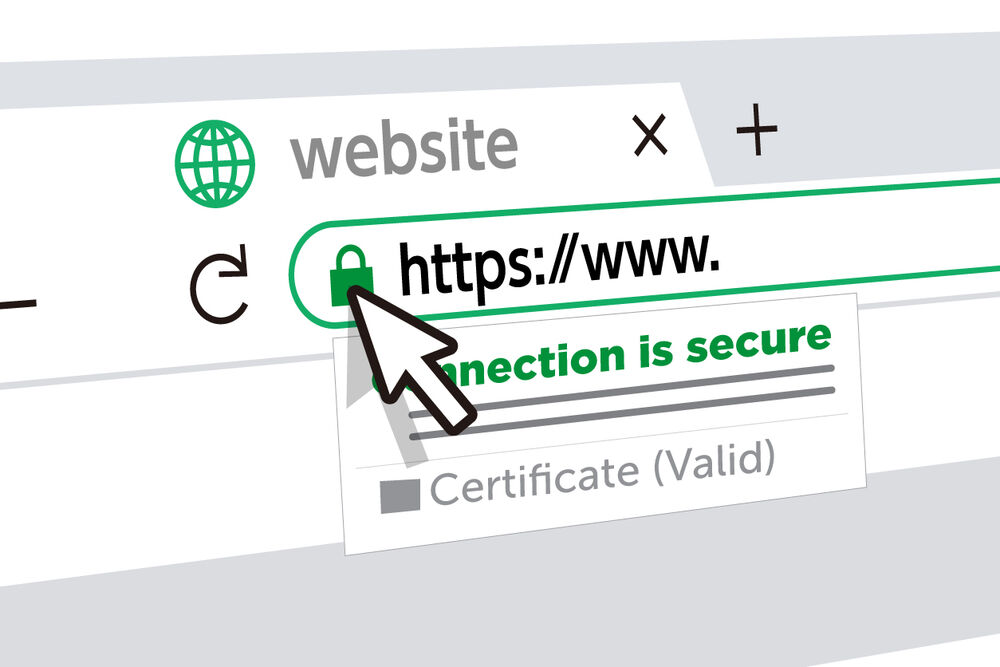
    • Security Features: Ensure they provide free SSL certificates and daily backups to protect your data.

    Portfolio Spotlight: WGS Express

    When managing the digital infrastructure for WGS Express, we prioritized a hosting environment that could handle heavy tracking requests and high-volume logistics data without breaking a sweat. By selecting a robust, high-performance hosting solution, we ensured their customers experience zero downtime when it matters most.

    Stop settling for “good enough” hosting. Your business deserves a foundation that can handle your growth. Contact iGrace MediaTech today to get your website hosted on a world-class infrastructure!

  • 7 Signs Your Business Website is Actually Costing You Money.

    7 Signs Your Business Website is Actually Costing You Money.

    Many business owners in Nigeria view their website as a “set it and forget it” project. However, in the fast-moving digital economy of 2026, an outdated or poorly optimized site isn’t just sitting idle—it’s actively pushing potential clients toward your competitors.

    If your website isn’t working as a 24/7 sales engine, it’s a liability. Here are the seven warning signs that your current site is draining your revenue.


    1. High Bounce Rates

    If your analytics show that visitors leave almost as soon as they arrive, your site has a “bounce” problem. This usually means your content doesn’t match their expectations or your design feels untrustworthy. Every bounce is a lost lead that you likely paid for through marketing or effort.

    2. Broken Links and Contact Forms

    There is nothing more expensive than a “Contact Us” form that doesn’t send emails or a “Buy Now” button that leads to a 404 error. If your technical infrastructure is broken, you are effectively closing your shop doors while customers are trying to walk in.

    3. It’s Not Optimized for Mobile

    With the vast majority of Nigerian users browsing on smartphones, a site that looks “broken” on mobile is a massive financial leak. If users have to pinch and zoom to read your services, they will leave.

    4. Slow Loading Times

    As we’ve discussed, speed is the new currency. A slow business website frustrates users and causes them to abandon their carts or inquiries before they even see what you offer.

    5. Lack of Clear Calls-to-Action (CTA)

    A website without a clear “Next Step” (like Book a Consultation or Download Our Brochure) is just a digital flyer. If visitors don’t know how to hire you, they won’t.

    6. Poor Search Engine Visibility

    If your business doesn’t appear on the first page of Google for your services, you are losing “free” organic traffic to your competitors every single day.

    7. Outdated Brand Image

    Your website is often the first point of contact. If it looks like it was built in 2015, it signals to customers that your business might be behind the times, too.


    Portfolio Spotlight: Oruvia Global

    When iGrace MediaTech took on the Oruvia Global project, the primary goal was to ensure their digital presence matched their status as a global leader in professional services. By streamlining the user journey and fixing structural performance issues, we transformed their platform from a static page into a high-performance asset that accurately represents their brand to an international audience.

  • The Difference Between a Template and a Custom-Built Website: Which is Right for Your Business?

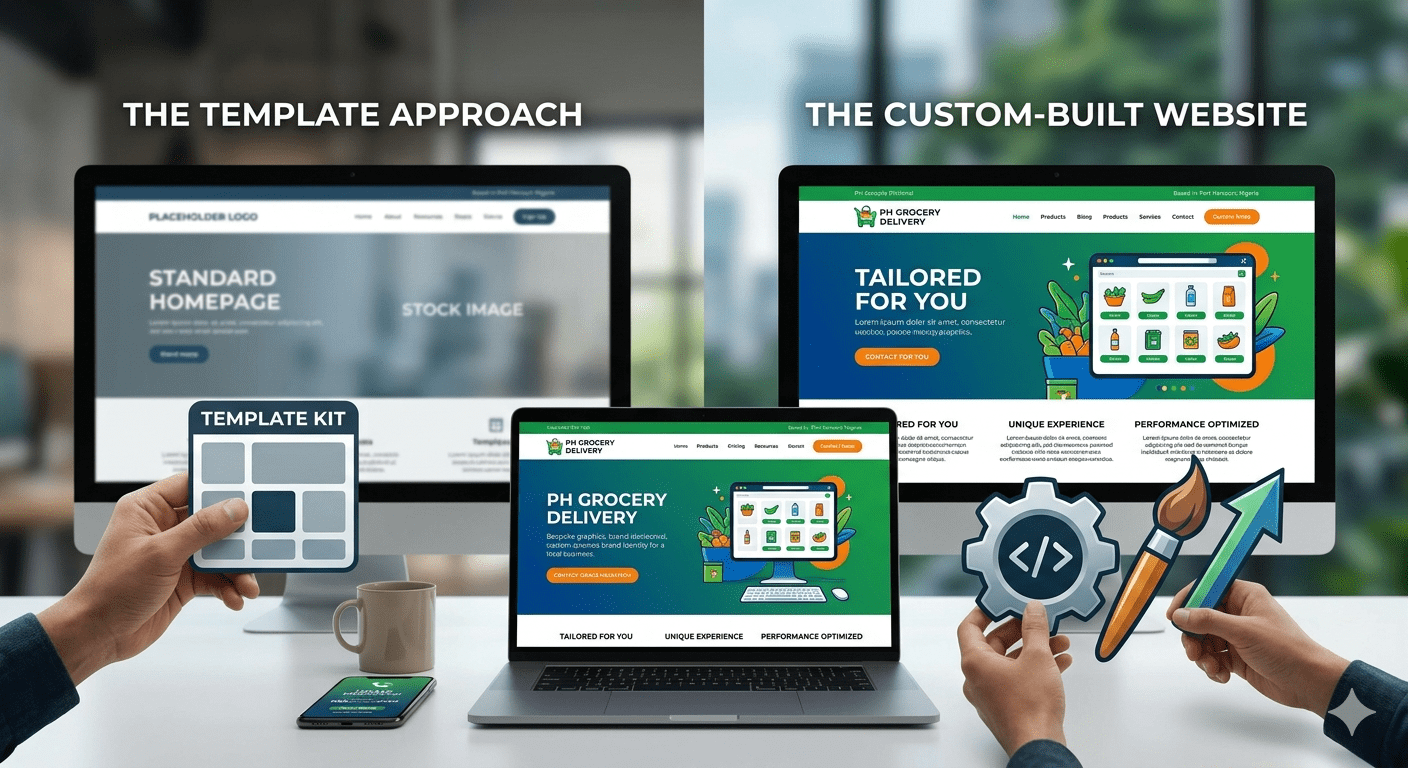
    The Difference Between a Template and a Custom-Built Website: Which is Right for Your Business?

    When you decide to take your business online, you’re immediately faced with a big question: Should I use a pre-made template or invest in a custom-built website?

    It’s like choosing between buying a “ready-to-wear” outfit or going to a tailor for a bespoke suit. Both will cover you, but only one is designed to fit your exact measurements and style. In the competitive Nigerian digital market, making the wrong choice here can affect your growth for years to come.

    Here is a breakdown of the real differences to help you decide.


    1. The Template Approach: Fast but Limited

    Templates (like those found on Wix, Squarespace, or basic WordPress themes) are pre-designed layouts where you simply “plug and play” your content.

    • The Pros: They are affordable and can be launched very quickly. If you just need a simple landing page by tomorrow, a template is the way to go.
    • The Cons: You are stuck within a box. If you want to move a button or add a unique feature that the template doesn’t support, you’re out of luck. Furthermore, because thousands of other businesses use the same template, your brand can end up looking like a “digital twin” of your competitor.

    2. Custom-Built Websites: Built for Performance

    A custom website is built from the ground up (often using clean code or advanced builders like React or tailored WordPress environments) specifically for your business goals.

    • Unique Brand Identity: Your website will look like nobody else’s. Every color, font, and interaction is designed to reflect your brand’s personality.
    • Superior Speed & SEO: Templates often come with “bloated code”—extra features you don’t need that slow your site down. Custom sites are lean and optimized, which Google loves (as we discussed in our post on website speed!).
    • Scalability: As your business grows, your website can grow with you. Need to integrate a complex booking system or a custom client portal later? With custom code, the sky is the limit.

    Which One Should You Choose?

    FeatureTemplate WebsiteCustom-Built Website
    BudgetLower initial costHigher initial investment
    Launch TimeDaysWeeks
    UniquenessCommon/Generic100% Unique
    PerformanceCan be slow/bloatedBlazing fast
    SEOBasicHighly Optimized

    The Verdict

    If you are a side-hustler just testing an idea, a template might be a good starting point.

    However, if you are an established business or a growing brand looking to dominate your industry, a custom-built website is an investment that pays for itself. It offers the professional credibility, speed, and flexibility required to turn visitors into long-term clients.

    At iGrace MediaTech, we specialize in high-performance custom builds that don’t just look pretty—they work hard for your bottom line.


    Ready to move beyond the “basic” look?

    Let’s build a digital home that truly represents your brand. Contact iGrace MediaTech today to discuss your custom web project!

  • Why Website Speed is the New “First Impression” for Nigerian Businesses.

    Why Website Speed is the New “First Impression” for Nigerian Businesses.

    In the early days of the Nigerian internet, we were used to the “loading…” bar. We would click a link, go get a glass of water, and hope the page was ready when we got back.

    But it’s 2026, and those days are long gone.

    Today, speed isn’t just a technical detail; it’s your virtual storefront’s front door. If that door doesn’t open in under 3 seconds, your customers aren’t just annoyed—they’re gone. For Nigerian businesses, website speed has officially become the most critical “first impression” factor.

    Here is why your site’s velocity is the ultimate deal-breaker in the local market.


    1. Nigeria is a Mobile-First Nation (And Mobile is Hard)

    Recent 2026 data shows that over 83% of Nigerian internet traffic comes from mobile devices. Unlike a stable office fiber connection, mobile users are often on the move, dealing with fluctuating 4G or 5G signals.

    A “heavy” website might load fine on your developer’s high-speed laptop in the office, but for a customer in Port Harcourt trying to browse your catalog on a smartphone, that same site can feel like a crawl. If your site isn’t optimized for mobile speed, you aren’t just losing a few visitors—you’re losing the vast majority of the Nigerian market.

    2. The “3-Second Rule” is Now a Law

    User patience has reached an all-time low. Statistics indicate that 53% of mobile users will abandon a site if it takes longer than 3 seconds to load.

    Think about your own habits: when you click an ad on Instagram or a link in a WhatsApp group, how long do you wait before hitting the back button? Your customers are doing the exact same thing to you. In Nigeria’s competitive digital space, a slow site is essentially an invitation for your customers to visit your competitor instead.

    3. Google’s 2026 Core Web Vitals are Strict

    Google doesn’t just want to provide the right answer; it wants to provide a fast answer. Google’s Core Web Vitals—metrics like Largest Contentful Paint (LCP) and Interaction to Next Paint (INP)—now play a massive role in where your business appears in search results.

    • LCP (Loading): How fast the main content appears.
    • INP (Responsiveness): How quickly the site reacts when a user clicks a button.
    • CLS (Stability): Ensuring buttons don’t jump around while the page loads.

    If your site is slow, Google will push you down the rankings, making you invisible to people searching for your services in Lagos, Abuja, or Port Harcourt.

    4. Slow Speed Kills Trust and Credibility

    A slow website reflects poorly on your professional brand. In an era where online scams are a concern, a fast, snappy, and responsive website signals reliability.

    If your site is laggy, broken, or takes forever to show a product image, a first-time visitor might wonder: “If they can’t manage their website, how will they handle my order?” Speed is the silent language of competence.


    How to Speed Up Your Nigerian Business Website

    At iGrace MediaTech, we specialize in making websites “blazing fast” for the local landscape. Here’s what we look at first:

    • Image Compression: Converting heavy images to modern formats like WebP.
    • Local Caching: Making sure your site doesn’t have to reload everything from scratch every time.
    • Code Optimization: Cleaning up “bloated” scripts that slow down the browser.
    • Reliable Hosting: Moving away from slow, overcrowded shared hosting to high-performance servers.

    The Bottom Line: You only get one chance to make a first impression. Make sure yours isn’t a loading spinner.


    Is your website holding your business back?

    Don’t let a slow site cost you another lead. Contact iGrace MediaTech today for a free speed audit and let’s get your business moving at full speed!

  • SEO for Beginners: Why Isn’t My Website on Google? (And How to Fix It)

    SEO for Beginners: Why Isn’t My Website on Google? (And How to Fix It)

    You did it. You built a beautiful website for your business. You launched it, shared the link with your family, and… silence.

    Days turn into weeks, and you have a sinking feeling. You type your business name into Google, and it’s nowhere to be found. You try searching for your products, like “best handbags in Lagos,” and your competitors show up, but you don’t.

    It feels like you built a beautiful shop in the middle of a forest with no roads leading to it.

    This is one of the most common frustrations we hear at iGrace Mediatech. The solution has a name: SEO.

    SEO stands for Search Engine Optimization. In plain English, it’s the process of proving to Google that your website is the best, most relevant answer to a customer’s search.

    You don’t need to be a tech wizard to get started. Here is your beginner-friendly guide to building the “road” that leads Google—and your customers—right to your website.


    Step 1: Officially Tell Google You Exist (Google Search Console)

    First things first: you need to introduce yourself to Google. The best way to do this is with a free tool called Google Search Console (GSC).

    Think of GSC as your direct communication line with Google. It’s where Google tells you if it’s having trouble “seeing” your site and where you can tell Google, “Hey, I’m new here, please check me out!”

    Your Action:

    1. Go to Google Search Console and add your website.
    2. Find your sitemap (your web developer can give you this, or plugins like Yoast SEO on WordPress generate it for you) and submit it to GSC.
    3. A sitemap is just what it sounds like: a map of all the pages on your site, which makes it much easier for Google to find and “crawl” them.

    Step 2: The “Must-Do” for Every Nigerian Business (Google Business Profile)

    This is the single most important step for any business with a physical location or one that serves a specific area. It’s the secret to appearing in “near me” searches.

    A Google Business Profile (GBP) is the information box that appears on the right side of a Google search or on Google Maps.

    It shows your:

    • Business name
    • Address (or service area)
    • Phone number
    • Opening hours
    • Customer reviews

    Your Action: Go to google.com/business and claim your free profile. Fill out every single detail. This is the fastest way to get “on the map” when a customer in your area searches for “buka near me” or “laptop repair in Abuja.”


    Step 3: Learn Your Customer’s “Google Language” (Keywords)

    You can’t be the “best answer” if you don’t know the “question.”

    Keywords are simply the words and phrases your ideal customers are typing into Google. Your job is to figure out what those are.

    Think like your customer.

    • Are you a fashion designer? They probably aren’t searching for “bespoke couturier.” They are searching for “aso ebi styles in Lagos” or “affordable wedding reception dress.”
    • Do you sell electronics? They might be searching for “price of Tecno phone in Nigeria” or “where to buy HP laptop in Port Harcourt.”

    Your Action: Make a list of 5-10 of these “search phrases.” These are your keywords. You will use them in the next step.


    Step 4: Put Your Keywords in the Right Places (On-Page SEO)

    Now that you have your keywords, you need to place them on your website so Google can connect the dots. This is called “On-Page SEO.”

    Don’t panic! You only need to focus on three simple places:

    1. Page Titles: This is the blue link that shows up in the Google search result. Your “Services” page title shouldn’t just be “Services.” It should be “Affordable Digital Marketing Services in Nigeria | iGrace Mediatech.”
    2. Headings (H1, H2): These are the big headlines on your page. Your main heading (H1) should include your primary keyword.
    3. Your Content: The actual paragraphs on your page. Write naturally, but make sure your keywords are included in a way that makes sense. If you’re writing about wedding dresses, you should naturally use the phrase “wedding dress.”

    Step 5: Get Other Websites to “Vouch” for You (Backlinks)

    This is the final (and most advanced) beginner step. Google wants to see that other people trust you. In the online world, a “vote of trust” is a link from another website to yours. This is called a backlink.

    When a popular Nigerian blog reviews your product and links to your website, they are “vouching” for you. Google sees this and thinks, “Hmm, this website must be important.”

    Your Action:

    • Ask a blogger in your industry to review your product.
    • Get your business listed in local online directories.
    • Write a helpful article and share it with industry partners.

    A Final Word: SEO is a Marathon, Not a Sprint

    You will not be #1 on Google tomorrow. SEO is an investment. It’s about building trust with Google and your customers over time.

    But by following these five steps, you have officially built the “road” to your shop. You’ve told Google you exist, you’re on the map, you’re speaking your customer’s language, and you’re building a reputation.

    It might seem technical, but it’s just a series of logical steps. Be patient, be consistent, and watch your customers start to find you.


    Feeling lost in the world of SEO?

    We get it. Running your business is a full-time job. At iGrace Mediatech, we don’t just build websites; we build businesses. From hands-on SEO training that empowers you to do it yourself to full-service digital marketing that does it for you, we are here to help you get found.

    Book a free SEO consultation with our team today and let’s get you on Google.

  • Your Logo is Not Your Brand: How Branding Really Builds Trust and Drives Sales

    Your Logo is Not Your Brand: How Branding Really Builds Trust and Drives Sales

    Let’s play a quick game.

    You’re scrolling on Instagram looking for a birthday cake. You find two vendors.

    • Vendor A: Has a blurry profile picture, photos are dark, the captions have typos, and their page name is “Kakes_by_Titi89.”
    • Vendor B: Has a clean logo, bright and clear photos, a professional bio, and a “Customer Reviews” story highlight. The page name is “Lagos Luxury Cakes.”

    Both might sell delicious cakes, but which one do you trust with your ₦25,000 and your special event?

    Exactly.

    As a small business owner in Nigeria, it’s easy to think of “branding” as a luxury—something only big companies like MTN or Dangote need to worry about. We hear clients say, “I just need sales, not a fancy logo.”

    But here’s the truth we’ve seen at iGrace Mediatech: You are losing sales because you’re ignoring your brand.

    Branding isn’t just your logo. Your brand is your reputation. It’s the feeling a customer has when they think of you. It’s your promise.

    And in a crowded market, trust is your most valuable asset. Here’s how branding builds that trust and turns it into sales.


    1. Branding Makes You Look Professional (And Trustworthy)

    Think about Vendor B. Their professional look wasn’t an accident. It was a conscious choice.

    A clear logo, consistent colours (on your site, your social media, your packaging), and professional graphics send an instant, subconscious signal to your customer: “We are serious about our business.”

    When a customer sees professionalism, they assume quality. They trust that you’re not a “what I ordered vs. what I got” business. This simple visual trust is the first step to getting them to open their wallet.


    2. Branding Sets You Apart from “Everyone Else”

    Let’s be honest: on Instagram, you are one of 100 people selling the exact same “human hair” or “unisex sneakers.” Your brand is the only thing that can set you apart.

    • Are you the affordable, fast-delivery brand?
    • Are you the luxury, exclusive brand?
    • Are you the friendly, community-focused brand?

    Without branding, price is the only thing you can compete on, and that is a race to the bottom. A strong brand gives customers a reason to choose you over the competition, even if you cost a little more.


    3. Branding Builds an Emotional Connection

    Great branding makes people feel something.

    Think about why people will passionately argue for an iPhone (Apple) over an Android (Google). It’s not just about the features; it’s about what the brand represents—creativity, simplicity, being part of a “tribe.”

    Your small business can do this too.

    By using a consistent tone of voice, sharing your “why” (your story), and showcasing your values, you build a community. People stop being just “customers” and become “fans.” They follow you, they engage with your posts, and they defend your brand in the comments. This is a loyalty that no advert can buy.


    4. How Trust Directly Converts to Sales

    This is where it all comes together.

    • Trust Overcomes Price Objections: A customer who trusts your brand is less likely to haggle on price. They are paying for your quality, your reliability, and the peace of mind that you will deliver.
    • Trust Creates Repeat Customers: It is 5x more expensive to find a new customer than to keep an old one. When a customer trusts you, they don’t go looking for another vendor next time. They come straight back to you. This is how you build a sustainable business.
    • Trust Generates Free Marketing (Word-of-Mouth): A happy, trusting customer becomes your number one salesperson. They will tell their friends, their family, and their WhatsApp groups: “Go to my plug, they are the best.” They will tag you in their posts. This is the most powerful (and free) marketing on earth.

    Start Building Your Brand Today

    Don’t get overwhelmed. You don’t need a Dangote-sized budget. Building a brand starts with small, consistent steps.

    1. Define Your Promise: What do you want to be known for? (e.g., “fastest service,” “best quality,” “friendliest experience”).
    2. Be Consistent: Use the same logo, colours, and tone of voice everywhere. On your WhatsApp profile, your Instagram, your invoice—everywhere.
    3. Keep Your Word: This is the most important part. If you promise 2-day delivery, deliver in 2 days. If you promise quality, sell quality. Every broken promise destroys trust.

    Your brand is your business’s greatest asset. It’s the foundation of trust. And trust, in Nigeria and everywhere else, is the real engine of sales.


    Ready to build a brand that customers love and trust?

    At iGrace Mediatech, we don’t just teach tech; we build businesses. From professional logo design and branding services to hands-on training that teaches you how to do it yourself, we’re here to help you succeed.

    Book a free brand consultation with us today and let’s build your legacy.

  • A Practical 5-Step Social Media Strategy for Small Businesses in Nigeria

    A Practical 5-Step Social Media Strategy for Small Businesses in Nigeria

    In Nigeria, “social media” is more than just a place to catch up and “press phone.” It’s the new high street, the modern marketplace, and the 24/7 customer service desk all rolled into one.

    As a small business owner, you’re probably already on Instagram, Facebook, or WhatsApp. But are you strategic?

    There’s a huge difference between being busy on social media (posting “vibes” whenever you remember) and being strategic (posting with a clear goal that grows your business).

    At iGrace Mediatech, we’ve trained hundreds of entrepreneurs, and we know the struggle. You have limited time, a tight budget, and a business to run. This post is your no-fluff, practical guide to building a social media strategy that actually brings in customers and makes you money.

    Let’s get started.


    Step 1: Define Your “Why” (Set Clear Goals)

    Before you post another “Available for ₦10,000” graphic, stop and ask: What is my main goal?

    If you don’t have a goal, you can’t measure success. Your “why” must be specific. Don’t just say “I want more sales.”

    Choose one or two primary goals:

    • 📈 Brand Awareness: “I want 5,000 new people in Lagos to know my brand exists this month.”
    • 💬 Lead Generation: “I want 20 people to send me a DM or WhatsApp message asking about my services this week.”
    • 🤝 Community Building: “I want to get 100 comments on my posts this month from loyal customers.”
    • 🌐 Website Traffic: “I want to drive 100 people from Instagram to my new product page.”

    Pro-Tip: Your goal will determine your content. A goal of “Brand Awareness” needs entertaining, shareable videos. A goal of “Lead Generation” needs a clear Call-to-Action (CTA) like “DM to order.”

    Step 2: Find Your People (Know Your Audience)

    You are not selling to “everyone in Nigeria.” Trying to sell to everyone means you will sell to no one. You need to know your ideal customer exactly.

    Get a piece of paper and create a “buyer persona.”

    • Where do they live? (e.g., A university student in Yaba or a high-income mum in Maitama, Abuja?)
    • How old are they?
    • What do they do?
    • What problem do they have that your product solves?
    • Most importantly: Which social media app do they use most?

    A 45-year-old B2B CEO will be on LinkedIn. A 19-year-old student will be on TikTok. A 30-year-old fashion lover will be on Instagram. Stop wasting your time on TikTok if your customer is a 50-year-old corporate executive.

    Step 3: Choose Your “Market” (The Right Platforms)

    Here is the biggest mistake Nigerian SMEs make: they try to be on every platform. You only have so much energy. Go where your customers are and dominate that space.

    Here’s your 2025 cheat sheet for Nigeria:

    • Facebook: The “General Market.” With over 70% of Nigerian social media users, it has a massive, diverse audience. It’s excellent for all business types and has powerful, low-cost advertising tools.
    • Instagram: The “Visual Showroom.” This is non-negotiable if you sell a visual product (fashion, food, cosmetics, art). Reels are your best friend for new customer discovery.
    • TikTok: The “Youth & Trend Hub.” If your audience is under 25, you must be here. It’s all about fast, authentic, and entertaining video.
    • X (Twitter): The “Customer Service & News Desk.” It’s perfect for real-time updates, handling customer complaints quickly, and joining national conversations.
    • LinkedIn: The “Corporate Office.” This is for B2B (Business-to-Business). If you sell services to other companies (like iGrace Mediatech!), this is your platform.

    🔥 The Nigerian Power-Play: WhatsApp Business

    WhatsApp is not just a social media app; it is your ultimate sales tool. With over 90% of Nigerian internet users on it, you must use it.

    Get the free WhatsApp Business app today. Use it for:

    • Catalog: Display all your products with prices, just like a mini-website.
    • Quick Replies: Answer common questions (“How much?” “Location?”) with one tap.
    • Status Updates: Showcase new stock, customer reviews, and “behind-the-scenes” content.
    • Customer Service: This is your direct line for building trust and closing sales.

    Step 4: Create Your “Content” (What to Post)

    Stop posting “buy my market” 10 times a day. People hate being sold to, but they love to buy. Your content needs to build trust.

    Use the 80/20 Rule:

    • 80% Value: Content that is helpful, entertaining, or engaging.
    • 20% Promotion: Content that directly sells your product.

    Here are content ideas that work in Nigeria:

    1. Educate: Show them how to use your product. A food seller can post a 30-second recipe. A fashion store can show “3 ways to style this one shirt.”
    2. Entertain: Use that trending TikTok sound. Share a funny, relatable meme (as long as it fits your brand). Show your team packing an order.
    3. Engage: Ask questions (“Which do you prefer, A or B?”). Run polls. Post a customer’s review (User-Generated Content) and tag them.
    4. Localize: Speak their language! If it fits your brand, use popular slang or even Pidgin. Talk about things happening in your city.

    Step 5: Budget, Measure, and Adapt

    You don’t need a million Naira to get results.

    • Budget: Start small. You can “boost” a post on Instagram or Facebook for as little as ₦5,000 to ₦20,000 to reach thousands of new, targeted people. The data shows this is one of the most cost-effective ways to grow.
    • Measure: Stop counting followers. A person with 10k “ghost” followers can make fewer sales than someone with 1,000 true fans.
      • Instead, track:
        • Engagement Rate: How many people are liking, commenting, and sharing?
        • DMs & Inquiries: How many people actually messaged you to ask for the price? This is the most important metric.
    • Adapt: Social media changes every week. What worked last month might not work today. If your video posts get 100 comments and your picture posts get 5, make more videos! Listen to your data.

    Your Transformation Starts Now

    Building a social media strategy isn’t a one-time thing. It’s a marathon, not a sprint. But by following these five steps, you will move from “just posting” to building a real, profitable online community.

    Be consistent, be authentic, and be patient.

    Feeling overwhelmed? It’s a lot of work, but you don’t have to do it alone. At iGrace Mediatech, we specialize in helping Nigerian businesses like yours thrive online.

  • Why Digital Marketing Is No Longer Optional for Businesses

    Why Digital Marketing Is No Longer Optional for Businesses

    Gone are the days when businesses relied only on flyers, banners, radio adverts, and word-of-mouth to get customers. Today, your customers live on their phones — browsing, researching, comparing brands, and making buying decisions online.

    If your business is not visible where your customers spend most of their time, you’re losing money and opportunities daily.

    This is why digital marketing is no longer a luxury — it is a necessity for modern businesses.


    1. Your Customers Are Online

    Nigerians spend hours daily on:

    • Google
    • Facebook
    • Instagram
    • TikTok
    • WhatsApp
    • YouTube

    If you’re not online, you’re invisible to thousands of potential customers.

    Digital marketing helps you reach them where they already are.


    2. Digital Presence Builds Trust

    Before people buy from you, they want to see proof and feel confident you are real.

    A strong digital presence includes:

    • A professional website
    • Social media pages
    • Customer reviews
    • Google Business Profile

    This builds credibility and trust, especially in a market filled with scams.


    3. It Levels the Playing Field

    You don’t need millions like big brands to compete online.

    Even small businesses can:

    • Run targeted ads
    • Rank on Google
    • Build a loyal audience
    • Sell through WhatsApp & social media

    With the right strategy, a small brand can outperform a big one.


    4. You Reach the Right People

    Digital marketing lets you target:

    • Age & gender
    • Location
    • Interests
    • Buying behavior
    • Industry / job roles

    Your message reaches people most likely to buy from you — not just random passersby.


    5. Measurable Results & Data

    With digital marketing, you see:

    • Who clicked your ad
    • Which content worked
    • Where your sales came from
    • Customer behavior

    Data helps you make smart marketing decisions and improve results.


    6. Cost-Effective & Higher ROI

    Compared to traditional advertising, digital marketing is cheaper and more effective.

    You can start small and scale as you grow — from ₦5,000 upward depending on the platform.


    7. Strengthens Customer Relationships

    With platforms like:

    • WhatsApp broadcast lists
    • Email newsletters
    • Facebook groups
    • Automated chat support

    You stay connected with customers, build loyalty, and drive repeat purchases.


    8. Your Competitors Are Doing It

    Whether you act or not, other businesses are online:

    • Running ads
    • Posting content
    • Capturing leads
    • Closing sales

    If you delay digital marketing, your competitors will take your customers.


    💡 The Bottom Line

    Digital marketing is no longer optional — it’s the lifeline of modern business growth.
    To stay relevant, visible, and profitable, your business must adapt.

    Businesses that embrace digital will grow faster.
    Those that ignore it will fall behind.


    🚀 Let iGrace Mediatech Help You Go Digital

    We help businesses build strong online presence and results-driven digital strategies.

    Our services include:

    ✅ Website Design & Branding
    ✅ Social Media Marketing
    ✅ SEO & Content Strategy
    ✅ Google & Social Ads
    ✅ Digital Skills Training
    ✅ Business Automation Tools

    📞 WhatsApp: +234 706 139 6843
    📧 Email: info@igrace.ng
    🌍 Website: igrace.ng

    Ready to take your business digital and dominate your market?
    👉 Send us a message today — let’s grow your brand.

  • 10 Common Website Mistakes Businesses Make — and How to Fix Them

    10 Common Website Mistakes Businesses Make — and How to Fix Them

    In the digital age, your website is often the first impression customers have of your business. But many Nigerian businesses rush into building websites and end up with platforms that don’t attract customers, don’t convert, and don’t represent their brand well.

    A website should not just exist — it should work.

    Here are the 10 most common website mistakes businesses make and how to fix them quickly.


    1. No Clear Purpose

    Some websites look nice but don’t tell visitors what the business actually does.

    Fix:
    Add a clear headline and service summary on your homepage.
    Example:

    “We help businesses grow with professional websites and digital solutions.”


    2. Poor Mobile Experience

    Over 80% of Nigerian internet users browse on smartphones. If your site isn’t mobile-friendly, you lose customers instantly.

    Fix:
    Use responsive designs and test your website on multiple devices.


    3. Slow Loading Speed

    A slow site = lost visitors.
    People leave if a page takes more than 3 seconds to load.

    Fix:

    • Compress images
    • Use a fast hosting provider
    • Enable caching & CDN

    4. No WhatsApp or Easy Contact Options

    Nigerians prefer quick communication — especially WhatsApp.

    Fix:
    Add:

    • WhatsApp chat button
    • Click-to-call button
    • Contact form

    5. No Call-to-Action (CTA)

    Visitors won’t take action if you don’t guide them.

    Fix:
    Add action buttons like:

    • Call Now
    • Request a Quote
    • Order on WhatsApp
    • Book a Consultation

    6. Outdated Design

    Old-looking websites make businesses appear unprofessional or inactive.

    Fix:
    Refresh your branding, layout, fonts, and visuals every 2–3 years.


    7. No SSL Security (Website shows “Not Secure”)

    A “Not Secure” warning scares customers and hurts Google ranking.

    Fix:
    Install SSL — many hosts offer it free (e.g., Let’s Encrypt).


    8. No SEO Strategy

    If people can’t find your business on Google, your website is invisible.

    Fix:

    • Use relevant keywords
    • Add blog content
    • Submit your site to Google Search Console

    9. No Social Proof

    Customers want proof that you’re real and reliable.

    Fix:
    Add:

    • Testimonials
    • Reviews
    • Client logos
    • Portfolio or case studies

    10. No Regular Updates

    A website left unattended becomes outdated, vulnerable, and boring.

    Fix:
    Update content regularly and maintain your site:

    • Add new blog posts
    • Refresh images
    • Update services
    • Install security updates

    Final Thoughts

    Your website is your digital office, sales tool, and brand showcase.
    Avoiding these common mistakes will help you:

    ✅ Attract the right customers
    ✅ Increase conversions
    ✅ Build trust and credibility
    ✅ Grow your business faster

    If your website has any of these issues, this is the right time to fix them — and we can help.


    🚀 Need a Website That Works?

    At iGrace Mediatech, we create modern, fast, secure, and conversion-focused websites that help businesses grow.

    Our services include:

    ✅ Corporate Websites
    ✅ E-Commerce Websites
    ✅ School Portals & LMS
    ✅ Church & NGO Websites
    ✅ Website Redesign & Maintenance
    ✅ SEO & Digital Branding

    📞 WhatsApp: +234 706 139 6843
    📧 Email: info@igrace.ng
    🌍 Website: igrace.ng

    Ready to upgrade your online presence?
    👉 Send us a message — let’s build something amazing.

  • Corporate vs E-commerce Websites: What’s the Difference?

    Corporate vs E-commerce Websites: What’s the Difference?

    In today’s digital world, every business needs an online presence — but not all websites are created equal. Many business owners get confused when deciding whether they need a corporate website or an e-commerce website.

    Both are powerful tools, but they serve different purposes.

    So, what is the difference, and which one is right for your business? Let’s break it down in simple terms.


    What is a Corporate Website?

    A corporate website is designed to showcase your business information, services, brand identity, and reputation. It helps potential clients learn who you are and how to contact you.

    Best for:

    • Companies & organizations
    • Service-based businesses
    • Agencies & consultants
    • Schools & training centres
    • Churches & NGOs
    • Government & institutions

    Key features of a corporate website:

    • About the company
    • Services pages
    • Contact information & location
    • Portfolio / case studies
    • Team profile
    • Blog / newsroom
    • Lead forms & WhatsApp chat
    • Testimonials & client logos

    Goal:
    Build trust, educate your audience, and generate inquiries.


    What is an E-commerce Website?

    An e-commerce website allows customers to buy products online directly. It includes everything found in online stores like Jumia, Konga, and Shopify sites.

    Best for:

    • Product-based businesses
    • Fashion & beauty brands
    • Supermarkets & stores
    • Electronics & gadget sellers
    • Furniture & lifestyle brands
    • Food vendors with online ordering

    Key features of an e-commerce website:

    • Product pages & categories
    • Shopping cart
    • Online payment integration (Paystack / Flutterwave)
    • Delivery options
    • Order tracking
    • Customer accounts & dashboard
    • Coupons & promo features
    • Inventory management

    Goal:
    Sell products online and accept payments instantly.


    Main Differences at a Glance

    FeatureCorporate WebsiteE-commerce Website
    PurposeBuild brand & generate leadsSell products directly
    Main UsersService-based businessesProduct-based businesses
    Key ToolsForms, portfolio, services pagesCart, checkout, inventory
    PaymentsNot requiredEssential
    ComplexitySimple to mediumMedium to high
    MaintenanceLowHigher (stock, orders, updates)

    📌 Which One Do You Need?

    Ask yourself:

    If your goal is to…You need a…
    Showcase services & company information✅ Corporate website
    Sell products online with payment & delivery✅ E-commerce website
    Build trust & authority✅ Corporate website
    Run an online store✅ E-commerce website

    Some businesses even combine both — a corporate site with an online shop section.


    Why Choosing the Right Website Matters

    A website is an investment. Choosing the right type ensures:

    • Better customer experience
    • Higher conversion rate
    • Professional brand image
    • Increased sales or inquiries
    • Long-term digital growth

    When you build the right platform, your business performs better online.


    🚀 Build the Perfect Website With iGrace Mediatech

    At iGrace Mediatech, we help businesses choose the right website solution and build powerful digital platforms that attract clients and generate revenue.

    ✅ Corporate Websites
    ✅ E-commerce Stores
    ✅ School Portals
    ✅ Church Websites
    ✅ NGO & Government Sites
    ✅ Business Landing Pages

    Let’s bring your brand to life online — professionally and affordably.

    📞 WhatsApp: +234 706 139 6843
    📧 Email: info@igrace.ng
    🌍 Website: igrace.ng

    Ready to get started?
    👇 Send us a message and let’s build your digital success together!