As enterprise adoption of artificial intelligence matures in 2026, corporate finance teams and Chief Technology Officers are re-evaluating their software expenditures. Two years ago, the fastest way to empower employees with AI was buying seats on off-the-shelf SaaS tools—copywriting assistants, automated reporting tools, customer support bots, and document analyzers.
Today, that rapid adoption has created an expensive, fragmented operational nightmare: SaaS bloat.
Companies find themselves paying thousands of dollars every month for dozens of separate subscription licenses. Meanwhile, employees utilize less than 20% of each platform’s features, data remains trapped in vendor silos, and recurring software costs scale aggressively with every new hire.
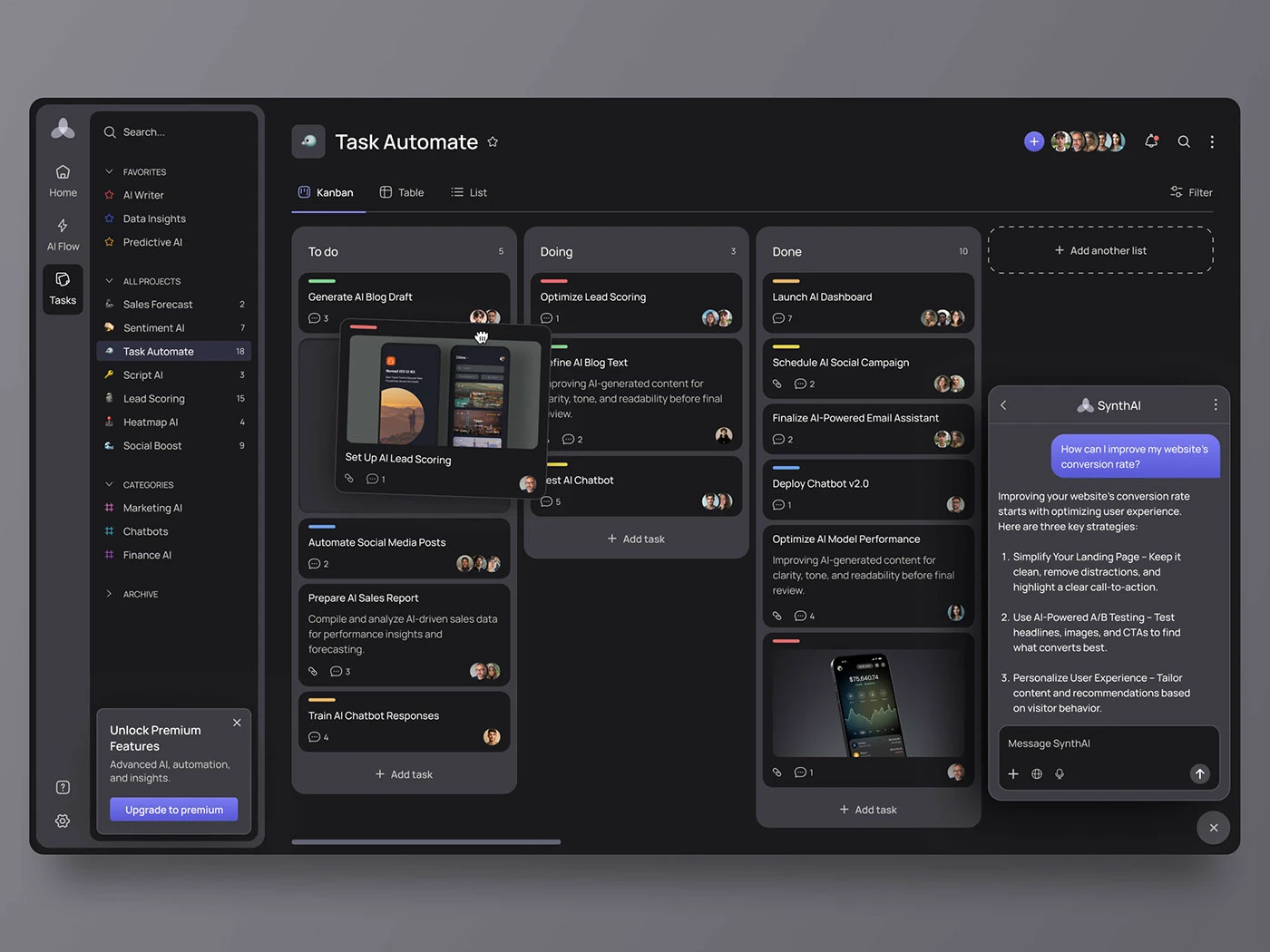
This cost dynamic has triggered a major operational shift. Growing organizations are ditching third-party SaaS subscriptions in favor of custom internal AI dashboards.
Here is an architectural and financial breakdown comparing the Return on Investment (ROI) of custom internal AI dashboards against monthly SaaS subscriptions—and why ownership consistently beats renting.
1. The Financial Breakdown: Capital Expenditure vs. “SaaS Tax”
The primary argument for off-the-shelf SaaS subscriptions is low initial friction. Paying $30 per user per month feels cheaper than investing in custom web application development.
However, this calculation ignores how quickly subscription costs compound as your team grows.
Scenario: A 50-Person Company Using 3 Specialized AI SaaS Tools
- Tool 1 (AI Document/PDF Analyzer): $25 / user / month
- Tool 2 (AI Data Analytics & Reporting): $35 / user / month
- Tool 3 (AI Customer Support Assistant): $30 / user / month
- Total Monthly Cost: $90 per user = $4,500 / month
- Annual SaaS Spend: $54,000 / year
Over three years, this company will spend $162,000 on recurring SaaS fees—and own zero software assets at the end of the contract.
       3-Year Cumulative Cost Comparison (50 Users)
┌───────────────────────────────────────────────────────────┐
│ Off-the-Shelf SaaS Subscriptions: $162,000 (Endless Rent)│
├───────────────────────────────────────────────────────────┤
│ Custom Internal AI Dashboard:     ~$35,000 Total Asset    │
└───────────────────────────────────────────────────────────┘
The Custom AI Dashboard Alternative
When you engineer a custom internal AI dashboard, your financial model shifts from recurring per-seat rent to direct, pay-per-token API usage (via providers like OpenAI, Anthropic, or hosting private open-weight models like Llama 3 on cloud infrastructure).
- Initial Custom Engineering Build: ~$20,000 – $30,000 (one-time asset development)
- Direct Token / API Usage for 50 Users: ~$150 – $300 / month
- Cloud Hosting & Maintenance: ~$150 / month
- Year 1 Total Cost: ~$25,000 (Build + Usage)
- Year 2 Total Cost: ~$5,000 (Usage & Maintenance)
- Year 3 Total Cost: ~$5,000 (Usage & Maintenance)
- 3-Year Total Spend: ~$35,000
Net 3-Year Savings: $127,000+ while retaining 100% ownership of your proprietary software platform.
2. Feature Bloat vs. Purpose-Built Workflow Efficiency
Off-the-shelf SaaS platforms are designed to serve millions of generic users across thousands of industries. To justify high monthly fees, SaaS vendors pack their applications with dozens of complex menus, settings, and unused features.
This creates significant operational friction:
- Fragmented Context: Employees spend hours switching between 5 different browser tabs, copying and pasting data from one SaaS dashboard to another.
- Onboarding Friction: New team members must learn complex third-party software interfaces rather than standard company procedures.
The Custom Dashboard Advantage
A custom internal AI dashboard is built around your company’s exact operational workflow.
Instead of opening a generic tool to summarize a contract, another to generate an invoice, and a third to query your SQL database, a unified internal dashboard consolidates all three actions into a single interface:
- Unified Data Ingestion: Upload an invoice or operational log directly to your internal web portal.
- Automated Cross-Referencing: The dashboard automatically queries your SQL database or ERP via secure API pipelines.
- One-Click Execution: The system parses the document, verifies data, generates summary reports, and triggers your internal approval workflows automatically.
3. Data Governance, RBAC, and Intellectual Property Security
When your staff inputs sensitive corporate data—financial projections, client lists, or proprietary source code—into third-party SaaS applications, you lose direct control over your data boundaries.
The Hidden Risks of AI SaaS Subscriptions:
- Vendor Lock-In: Your historical data and workflow analytics remain trapped inside third-party databases.
- Unclear Retention Policies: Many off-the-shelf SaaS vendors retain prompt logs for internal evaluation unless you negotiate enterprise-grade tier contracts.
- Lack of Role-Based Access Control (RBAC): Generic team accounts often allow any employee with a login to view sensitive administrative outputs.
The Custom Dashboard Advantage
With a custom internal AI dashboard built on modern web frameworks (such as Next.js, PostgreSQL, and Tailwind CSS), your data perimeter is completely secured:
- Zero-Data-Retention Endpoints: API calls utilize enterprise-grade endpoints where data retention is strictly disabled by contract.
- Granular RBAC: Configure role-based permissions directly tied to your company’s single sign-on (SSO) or corporate directory. A sales associate sees only sales-related AI tools, while financial projections remain restricted strictly to executives.
- 100% IP Ownership: Your company owns the web source code, database architecture, and custom system prompts, turning technology into a tangible balance-sheet asset.
4. Scalability Without Financial Penalty
In a traditional SaaS model, scaling your workforce incurs a direct financial penalty: every new hire requires another round of monthly software seat licenses. This encourages bad operational habits—such as employees sharing passwords on generic accounts, which compromises security and destroys audit trails.
A custom internal AI dashboard eliminates per-user pricing entirely. Whether you have 10 employees or 500 accessing the platform, your primary ongoing cost is raw compute and token consumption.
Because API token prices continue to drop year-over-year while foundation models become faster and more efficient, your cost per employee decreases as your company grows.
Calculating Your ROI: When Should You Build?
Building a custom internal AI dashboard is the clear financial and strategic choice if your organization meets any of the following criteria:
| Operational Metric | SaaS Subscriptions | Custom Internal AI Dashboard |
| Team Size | < 5 employees | 10+ employees |
| Annual SaaS Spend | < $5,000 / year | > $15,000 / year |
| Data Requirements | Public / General data | Proprietary / Strict Compliance |
| Workflow Complexity | Standard / Independent | Cross-Database / Multi-System |
Build Your Custom Enterprise AI Infrastructure with iGrace MediaTech
Renting off-the-shelf software tools might solve immediate short-term needs, but long-term profitability belongs to companies that own their digital infrastructure.
At iGrace MediaTech, we engineer high-performance web applications, secure internal administrative portals, and custom AI dashboards tailored to your enterprise workflows. We help businesses eliminate subscription bloat, protect proprietary data, and streamline complex operations with solutions designed for scale.
- Ready to calculate the ROI of building a custom AI platform for your business? Contact the technical team at iGrace MediaTech today to schedule an architectural consultation.