The software development landscape is undergoing its most dramatic transformation since the invention of high-level programming languages. With intelligent code assistants, automated testing frameworks, and generative AI models capable of spinning up entire applications from a simple prompt, a pivotal question echoes through tech boardrooms and coffee shops alike: Is AI coding just a passing trend, or is it here to stay?
At iGrace Mediatech, we look past the hype cycle to examine how artificial intelligence is permanently reshaping engineering, productivity, and the future of software creation.
The Evolution of the Developer’s Toolkit
To understand where we are going, it helps to look at where we started. Developers have always embraced automation:
- The Shift from Punch Cards to Integrated Development Environments (IDEs).
- The Rise of Open-Source Libraries that saved teams from reinventing the wheel.
- Continuous Integration and Deployment (CI/CD) pipelines that automated testing and delivery.
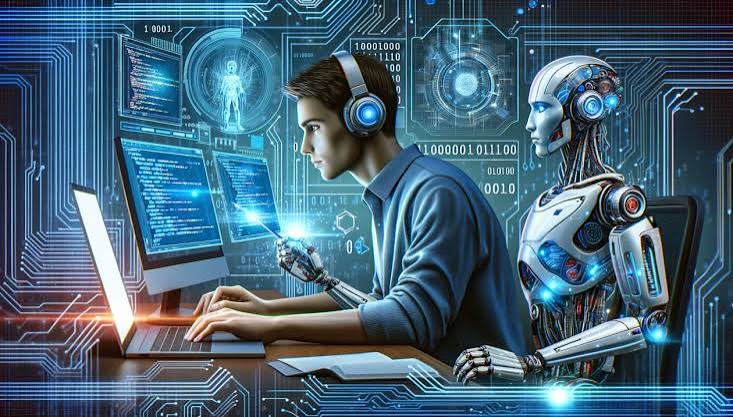
AI is simply the next—and most powerful—iteration of this evolution. Tools like GitHub Copilot, ChatGPT, and specialized autonomous agents do not replace the developer; they act as tireless pair programmers. They handle boilerplate code, suggest optimized algorithms, and translate natural language requirements into functional syntax in seconds.
Why AI Coding is Here to Stay
Skeptics often compare AI coding to previous over-hyped tech bubbles, but the underlying metrics tell a completely different story. Here is why artificial intelligence is a permanent fixture in modern software engineering:
1. Unprecedented Productivity Gains
Time is the most valuable asset in tech. Studies consistently show that developers using AI-assisted tools complete tasks significantly faster. By offloading repetitive syntax, routine documentation, and standard unit tests to AI, engineering teams free up mental bandwidth to focus on complex architecture, security, and innovative user experiences.
2. Lowering the Barrier to Entry
AI is democratizing software creation. While professional developers use it to accelerate complex builds, product managers, designers, and entrepreneurs can now prototype ideas faster than ever before. Natural language is becoming the new universal programming language.
3. Continuous Evolution and Contextual Awareness
Unlike static code snippets or rigid templates, modern AI models learn from vast repositories of global codebases. They understand context, adhere to modern framework best practices, and continuously adapt to new updates in programming languages.
The Human Element: Why Developers Aren’t Going Anywhere
Despite fears that AI will render programmers obsolete, the reality is far more nuanced. AI excels at pattern matching and prediction, but it lacks crucial human traits:
- Strategic Vision: AI can write code, but it cannot decide what product solves a real human problem.
- Empathy and UX: Understanding user emotion, accessibility needs, and intuitive design requires human intuition.
- Accountability: An AI model cannot take responsibility for a security breach, a scalability bottleneck, or ethical data usage.
At iGrace Mediatech, we believe the future belongs to augmented developers—professionals who leverage AI to amplify their creativity rather than relying on it blindly.
Looking Ahead
AI coding is no longer a futuristic concept we are waiting for; it is the standard operating procedure of today. Organizations that embrace these tools will outpace competitors in speed, agility, and innovation. Those that resist risk getting left behind in a slower, manual past.
The code of tomorrow is being written today—faster, smarter, and with human ingenuity at the helm.The software development landscape is undergoing its most dramatic transformation since the invention of high-level programming languages. With intelligent code assistants, automated testing frameworks, and generative AI models capable of spinning up entire applications from a simple prompt, a pivotal question echoes through tech boardrooms and coffee shops alike: Is AI coding just a passing trend, or is it here to stay?
At iGrace Mediatech, we look past the hype cycle to examine how artificial intelligence is permanently reshaping engineering, productivity, and the future of software creation.
The Evolution of the Developer’s Toolkit
To understand where we are going, it helps to look at where we started. Developers have always embraced automation:
- The Shift from Punch Cards to Integrated Development Environments (IDEs).
- The Rise of Open-Source Libraries that saved teams from reinventing the wheel.
- Continuous Integration and Deployment (CI/CD) pipelines that automated testing and delivery.
AI is simply the next—and most powerful—iteration of this evolution. Tools like GitHub Copilot, ChatGPT, and specialized autonomous agents do not replace the developer; they act as tireless pair programmers. They handle boilerplate code, suggest optimized algorithms, and translate natural language requirements into functional syntax in seconds.
Why AI Coding is Here to Stay
Skeptics often compare AI coding to previous over-hyped tech bubbles, but the underlying metrics tell a completely different story. Here is why artificial intelligence is a permanent fixture in modern software engineering:
1. Unprecedented Productivity Gains
Time is the most valuable asset in tech. Studies consistently show that developers using AI-assisted tools complete tasks significantly faster. By offloading repetitive syntax, routine documentation, and standard unit tests to AI, engineering teams free up mental bandwidth to focus on complex architecture, security, and innovative user experiences.
2. Lowering the Barrier to Entry
AI is democratizing software creation. While professional developers use it to accelerate complex builds, product managers, designers, and entrepreneurs can now prototype ideas faster than ever before. Natural language is becoming the new universal programming language.
3. Continuous Evolution and Contextual Awareness
Unlike static code snippets or rigid templates, modern AI models learn from vast repositories of global codebases. They understand context, adhere to modern framework best practices, and continuously adapt to new updates in programming languages.
The Human Element: Why Developers Aren’t Going Anywhere
Despite fears that AI will render programmers obsolete, the reality is far more nuanced. AI excels at pattern matching and prediction, but it lacks crucial human traits:
- Strategic Vision: AI can write code, but it cannot decide what product solves a real human problem.
- Empathy and UX: Understanding user emotion, accessibility needs, and intuitive design requires human intuition.
- Accountability: An AI model cannot take responsibility for a security breach, a scalability bottleneck, or ethical data usage.
At iGrace Mediatech, we believe the future belongs to augmented developers—professionals who leverage AI to amplify their creativity rather than relying on it blindly.
Looking Ahead
AI coding is no longer a futuristic concept we are waiting for; it is the standard operating procedure of today. Organizations that embrace these tools will outpace competitors in speed, agility, and innovation. Those that resist risk getting left behind in a slower, manual past.
The code of tomorrow is being written today—faster, smarter, and with human ingenuity at the helm.